Field chapter 04 / Conservation
Keeping Crossings Legible
A historic route survives through decisions: where to repair, where to divert, what to explain and when to let a vulnerable place rest.
What exactly are we preserving?
A mountain crossing is not a single object. It can include paving, walls, drainage, bridges, shelters, inscriptions and a relationship with the surrounding terrain. It may also depend on skills, local names and continuing patterns of use. Preserving only an attractive surface can leave the larger story unreadable.
At the Brenner, successive transport systems reveal change rather than an untouched past. At Great St Bernard, the hospice’s continuing purpose matters alongside its fabric. On Qhapaq Ñan, community knowledge can be essential to a route’s survival. Conservation begins by identifying these different values, not by applying one visual ideal to every place.
Water often matters more than spectacle
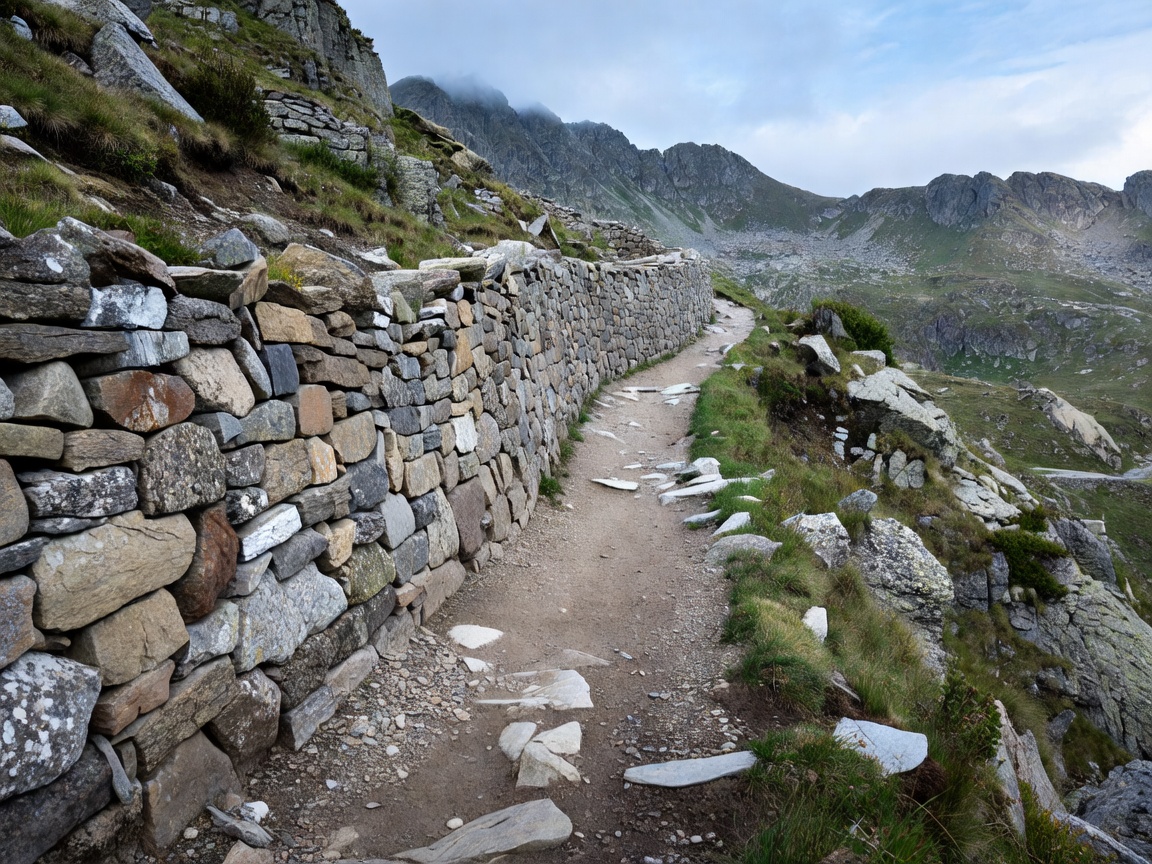
A blocked drain may appear less urgent than a damaged monument, yet water can undermine an entire route. Runoff strips fine material from joints, saturates foundations and directs erosion along the walking surface. Freeze-and-thaw cycles can then enlarge weaknesses. Maintenance of small drainage features is often fundamental preventive work.
Visitors should not clear channels or reposition stones without authorisation. A feature may be archaeologically sensitive, and moving material can redirect water toward another vulnerable section. Report a problem to the responsible manager with a location and a photograph taken from a safe place. Helpful intentions do not replace technical judgement.
Repair is a historical decision
A freshly rebuilt wall can look reassuringly complete while obscuring the distinction between surviving material and reconstruction. Equally, refusing every intervention can allow evidence to disappear. Conservators weigh stability, compatibility of materials, documentation, future maintenance and the significance of what remains.
The Venice Charter and the Nara Document on Authenticity are useful reference points for understanding conservation debates, not simple instructions for an untrained visitor to apply on site. They encourage attention to evidence and cultural context. A living route may retain authenticity through continued knowledge and use even when individual materials are renewed.
This is especially clear at Q’eswachaka, where renewal belongs to the heritage itself. It is quite different from rebuilding an abandoned paved road to make it appear ancient. The same word—restoration—can conceal very different purposes, methods and relationships with the people who care for a place.
Access can protect—or consume
A new path may reduce pressure on fragile paving, while a badly placed viewing platform can interrupt the landscape relationships visitors came to understand. Parking, signs and barriers deserve scrutiny too. Good access design asks how people arrive, where they gather and what repeated use will do over time.
Closure is not always a failure of hospitality. It can protect unstable material, allow repairs or respect community needs. An alternative viewpoint, a local museum or a documented digital interpretation may offer a more responsible encounter. There is no historical entitlement to stand on every surviving stone.
Make useful observations without intervening
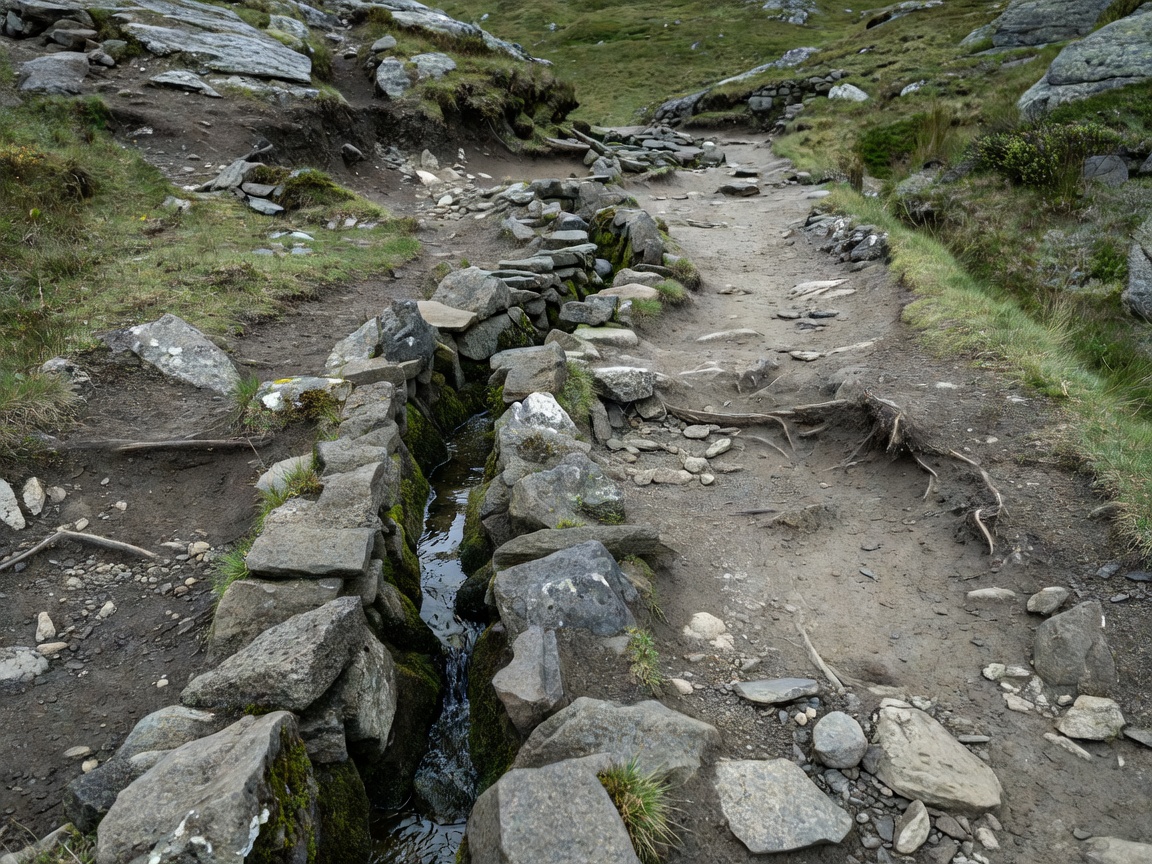
Look for changes in paving size, wall construction or alignment, but resist assigning dates from appearance alone. A repair may reuse older stones. An apparently ancient surface may be a later reconstruction. Record what you can actually see, then compare it with a reliable site account rather than turning a visual impression into a confident claim.
Photographs are most useful when they include context. One wide view showing the slope and route can explain a problem better than a dramatic close-up. Avoid sharing precise locations of unprotected archaeological material where publicity could increase damage. Send sensitive observations privately to the appropriate heritage body.
| What you encounter | A responsible response | Why it matters |
|---|---|---|
| Fragile paving and a signed diversion | Use the diversion even if the old line looks passable. | Repeated footfall can loosen material and widen damage. |
| A fallen stone beside a wall | Leave it in place and report it if appropriate. | Its position may help explain the failure. |
| A working community route | Give local users space and ask before photographing. | Heritage access should not displace everyday life. |
| An uncertain inscription | Photograph without touching or enhancing the surface. | Physical alteration can destroy evidence. |
Support care rather than just consumption
Use legitimate local guides, pay required entrance fees and follow group-size rules. Seek interpretation that credits local knowledge and explains uncertainty. Avoid operators who promise access beyond barriers or encourage collection, climbing on ruins or unsanctioned shortcuts. Convenience is not evidence of permission.
The aim is not to keep every crossing unchanged. Roads have always been adapted, and communities have legitimate needs for safety and connection. Thoughtful stewardship makes those changes understandable while retaining significant evidence. A well-cared-for route lets future visitors ask better questions, rather than offering only a polished image of an invented past.
Reference points
- ICOMOS — conservation principles and international heritage discussion.
- UNESCO: Qhapaq Ñan — a transnational example of route conservation.
- ICCROM — resources on cultural heritage conservation and capacity building.